
Court hollows out a landmark law that had protected minority voting rights
Attorneys in the News

President Lyndon B. Johnson knew the legislation he was about to sign was momentous, one that took courage for certain members of Congress to pass since the vote could cost them their seats.
To honor that, he took the unusual step of leaving the Oval Office and going to Capitol Hill for the signing ceremony. It was Aug. 6, 1965, five months after the "Bloody Sunday" attack on civil rights marchers in Selma, Alabama, gave momentum to the bill that became known as the Voting Rights Act.
In the six decades since, it became one of the most consequential laws in the nation's history, preventing discrimination against minorities at the ballot box and helping to elect thousands of Black and Hispanic representatives at all levels of government.
On Wednesday, the U.S. Supreme Court knocked out a major pillar of the law that had protected against racial discrimination in voting and representation. It was a decision that came more than a decade after the court undermined another key tenet of the law and led to restrictive voting laws in a number of states. Voting and civil rights advocates were left fearful of what lies ahead for minority communities.
"It means that you have entire communities that can go without having representation," said Cliff Albright, a co-founder of the group Black Voters Matter. "It is literally throwing us back to the Jim Crow era unapologetically, and that's not exaggeration."
Kareem Crayton, vice president of the Brennan Center for Justice's Washington office, said the court's steady work to erode the Voting Rights Act, culminating in Wednesday's decision, amounted to "burying it without the funeral."
The Supreme Court's ruling came in a congressional redistricting case out of Louisiana after the state created a district that gave the state its second Black representative to Congress.
It found that map to be an unconstitutional gerrymander because it took race into account to draw the lines. In an opinion written by Justice Samuel Alito, the court's conservative majority said the provision of the Voting Rights Act in question, called Section 2, was designed to protect voters from intentional discrimination.
Justice Elena Kagan in her dissent said the bar to show intentional discrimination is "an almost insurmountable barrier for challenges to any voting rights issues to prove discrimination."
Voting rights experts said the ruling leaves the Voting Rights Act only a shell of what it had been and will provide an open door for political mapmakers at every level — from local school districts to state legislatures to Congress — to undermine minority representation.
"We're witnessing the evisceration of America's greatest legislative landmark at the hands of a far right Supreme Court," Democratic U.S. Rep. Ritchie Torres of New York said.
Maria Teresa Kumar, president of Voto Latino, said the decision will allow more aggressive "cracking and packing" of populations to dilute their votes, "not just in congressional districts but also in state legislatures, county commissions, school boards and city councils."
Voting rights experts said there is no doubting the law's impact over the decades.
Sherrilyn Ifill, a law professor at Howard University and the former president of the NAACP Legal Defense Fund, said there were about 1,500 Black elected officials throughout the country in 1970. Today, that stands at more than 10,000.
"And it isn't because of the goodness of people's hearts," she said.
She said that success was a direct result of Black communities, civil rights activists and lawyers having the tools, through the Voting Rights Act, to file challenges to efforts to diminish the voting strength of Black and Hispanic voters. Most of the Section 2 cases have been over representation in local governments.
Related listings
-

Maryland redistricting case comes before Supreme Court
Attorneys in the News 03/27/2018The Supreme Court is taking up its second big partisan redistricting case of the term amid signs the justices could place limits on drawing maps for political gain.The justices are hearing arguments Wednesday in an appeal filed by Republicans in Mary...
-

Kenya's High Court orders government's TV shutdown to end
Attorneys in the News 02/02/2018Kenya's High Court on Thursday ordered the government to end its shutdown of the country's top three TV stations after they tried to broadcast images of the opposition leader's mock inauguration, a ceremony considered treasonous.Journalists and human...
-

EU court rejects Hungary, Slovakia appeal in refugee case
Attorneys in the News 09/08/2017The European Union's top court on Wednesday rejected legal action by Hungary and Slovakia to avoid accepting refugees under an EU scheme, a decision seen as a victory for countries bearing the greatest burden of Europe's migrant wave.In a long-awaite...
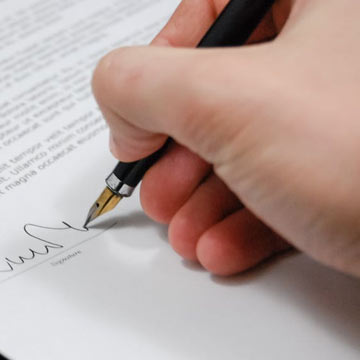
Thai National Sentenced, Faces Deportation for Operating Immigration Fraud Scheme
Nimon Naphaeng, 36, a native and citizen of Thailand, who resided in Wakefield, R.I., was sentenced Monday to 27 months in federal prison for running an immigration fraud scheme that defrauded more than 320 individuals, most of them immigrants, of at least $400,000, and perhaps more than $518,000.
The scheme included the unauthorized filing of false asylum applications on behalf of individuals who did not request, nor authorize, the applications.
“U.S. Citizenship and Immigration Services does not tolerate immigration fraud of any kind,” said Susan Raufer, director of the USCIS Newark Asylum Office. “We are proud of our role in uncovering this fraud scheme and bringing the perpetrator to justice.”
At sentencing, U.S. District Court Chief Judge William E. Smith ordered a provisional amount of restitution of $400,000. The final amount of restitution will be determined subject to additional victims being identified and additional court filings over the next 90 days. According to court documents already filed by the government, restitution in this matter may exceed $518,300. During the investigation, the government seized $285,789.31 from Naphaeng. The forfeited funds will be applied toward restitution for victims of Naphaeng’s crimes.