
Trump is at the Court as it hears arguments over his bid to limit birthright citizenship
Civil Litigation News

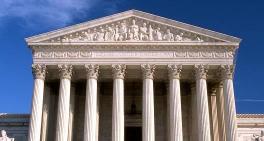
The Supreme Court is taking up one of the term's most consequential cases, President Donald Trump's executive order on birthright citizenship declaring that children born to parents who are in the United States illegally or temporarily are not American citizens, and he was in the courtroom on Wednesday to attend the arguments.
The justices will hear Trump's appeal of a lower-court ruling from New Hampshire that struck down the citizenship restrictions, one of several courts that have blocked them. They have not taken effect anywhere in the country.
Trump is the first sitting president to attend oral arguments at the nation's highest court. Crowds watched from the sidewalks as his motorcade drove along Constitution and Independence Avenues, passing the Washington Monument and the National Mall on the way to the court building.
The case frames another test of Trump's assertions of executive power that defy long-standing precedent for a court that has largely ruled in the president's favor — but with some notable exceptions that Trump has responded to with starkly personal criticisms of the justices. A definitive ruling is expected by early summer.
The birthright citizenship order, which Trump signed the first day of his second term, is part of his Republican administration's broad immigration crackdown.
Birthright citizenship is the first Trump immigration-related policy to reach the court for a final ruling. The justices previously struck down global tariffs Trump had imposed under an emergency powers law that had never been used that way.
Trump reacted furiously to the late February tariffs decision, saying he was ashamed of the justices who ruled against him and calling them unpatriotic.
"Birthright Citizenship is not about rich people from China, and the rest of the World, who want their children, and hundreds of thousands more, FOR PAY, to ridiculously become citizens of the United States of America. It is about the BABIES OF SLAVES!," the president wrote. "Dumb Judges and Justices will not a great Country make!"
Trump's order would upend the long-standing view that the Constitution's 14th Amendment, ratified in 1868, and federal law since 1940 confer citizenship on everyone born on American soil, with narrow exceptions for the children of foreign diplomats and those born to a foreign occupying force.
Related listings
-
Supreme Court strikes down 2 NC congressional districts
Civil Litigation News 07/26/2017The Supreme Court struck down two congressional districts in North Carolina Monday because race played too large a role in their creation.The justices ruled that Republicans who controlled the state legislature and governor's office in 2011 placed to...
-
Court revives black TV network's discrimination lawsuit
Civil Litigation News 07/23/2017A federal appeals court has revived a lawsuit claiming that a North Carolina city discriminated against an African-American-owned television network.A divided three-judge panel of the 4th U.S. Circuit Court of Appeals on Friday reversed a lower court...
-
High court ruling may give voter rights groups a strong tool
Civil Litigation News 07/13/2017The Supreme Court's ruling that two North Carolina congressional districts relied too heavily on race should give voting-rights advocates a potent tool to fight other electoral maps drawn to give Republicans an advantage in the state.The justices agr...

How do you qualify for workers compensation in Illinois?
The Workers’ Compensation Statute protects every employee in the State of Illinois.
A victim of a work-related injury or illness is eligible for many forms of compensation including reasonable medical care required to cure or relieve the impact of the injury, lost time from work, and any temporary or permanent disability.
Illinois Workers’ compensation is a system of benefits that:
– Pays for the medical treatment and medical bills incurred by work-related injuries and illnesses.
– Pays for the lost time from work
– Pays for any temporary or permanent disabilities
– Covers nearly every employee in Illinois
– and begins the very first day that you start working for your employer.
Employers in Illinois are required to purchase workers’ compensation insurance for their employees and the insurance companies fund the payment of worker’s compensation benefits for employees’ claims. In the event of a dispute, the Illinois Workers’ Compensation Commission (IWCC, or the Commission) enforces the state’s worker’s compensation laws and protects worker rights.